


GMC Sierra 1500 for Maine Winters: Capability, Preparation, and Driving Tips
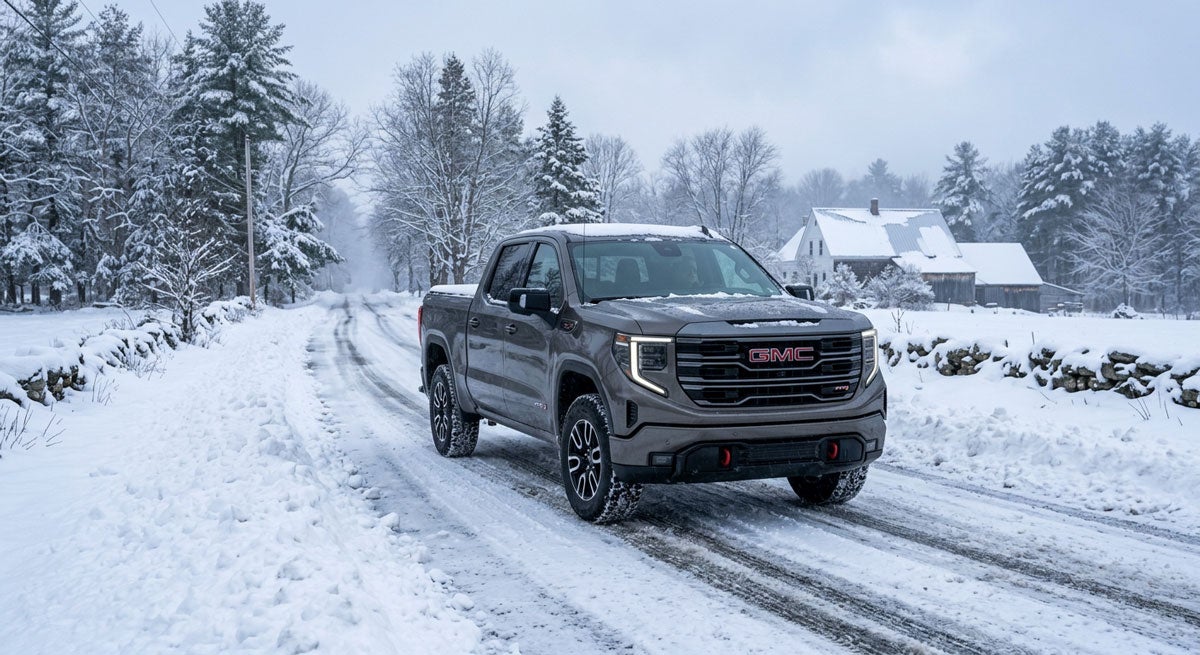
If you live in Maine, you don't need anyone to explain why winter capability matters in a daily driver. Five months of cold, snow, ice, and salt take a toll on any vehicle — and they reward the trucks that are built to handle it. The 2026 GMC Sierra 1500 is one of those trucks. With 4WD, modern traction systems, available off-road hardware, and a long list of cold-weather comfort features, a properly-equipped and properly-prepared Sierra is one of the most confident vehicles you can put under you on a January morning in southern Maine.
This guide covers everything you need to know about Sierra 1500 winter capability — how the 4WD system works, what tires to run, which trims are best for hard winter use, the cold-weather features worth knowing about, and the maintenance schedule that keeps the truck (and you) reliable from November through April. Our service team in Arundel handles winter prep on dozens of Sierras every fall, and the tips below are exactly what we walk customers through.
Quick Answer: Sierra 1500 Winter Readiness
- Best trim for Maine winter daily driving: SLT or AT4 with 4WD (good balance of capability and daily comfort)
- 4WD system to use most often: Auto 4WD for daily driving in mixed conditions; 4Hi when roads are clearly snow-covered; 4Lo for steep grades, deep snow, or recovery
- Tires that matter: Dedicated winter tires (studded or non-studded) on any Sierra used as a daily driver from December through March
- Most useful cold-weather features: Heated front seats, heated steering wheel, remote start, heated windshield washer system, heated rear outboard seats (available)
- Critical pre-winter maintenance: Battery test, coolant check, tire swap, undercoating, top off washer fluid with winter-grade
The Sierra 1500's 4WD System: How to Use It in Winter
Most 4WD-equipped Sierra 1500 trims (SLE, Elevation, SLT, AT4, AT4X, Denali, Denali Ultimate) include a two-speed transfer case with multiple operating modes. Knowing when to use each one is the difference between fighting your truck in the snow and letting it work for you.
2WD (Rear-Wheel Drive)
When to use: Dry pavement, light rain, summer driving, fuel economy priority.
When NOT to use: Any winter scenario with snow, ice, slush, or wet leaves on the road. Standard 2WD trucks have very limited traction in winter conditions.
Auto 4WD
When to use: Mixed conditions where roads might be partially clear and partially slick. The system automatically engages 4WD when wheel slip is detected and disengages when traction returns. This is the mode most southern Maine drivers should use as their default in winter.
Why it works: You don't have to think about it. The truck handles the transitions automatically, which matters when you go from a plowed main road onto an unplowed side street without warning.
4Hi (4-Wheel Drive High)
When to use: Roads that are clearly and consistently snow-covered, ice-covered, or slick. Good for highway driving in winter storms or any sustained low-traction surface above 25 mph.
What it does: Locks front and rear axles together so all four wheels turn at the same speed. Provides maximum traction at normal driving speeds.
4Lo (4-Wheel Drive Low)
When to use: Deep snow, steep snow-covered grades, recovery situations, getting un-stuck. Limited to low speeds (typically under 25 mph). Engages a lower gear range that multiplies torque.
What it does: Combines locked axles with a much lower gear ratio for maximum pulling power at low speeds. The truck moves slowly but with tremendous force — useful for crawling out of a deep snowbank or climbing a steep, unplowed driveway.
Hill Descent Control
Standard on AT4 and AT4X (and available on other trims). Maintains a slow, controlled speed on steep snowy or icy descents without you needing to feather the brakes. The truck handles the speed; you handle the steering. Useful on long downhill grades that would otherwise require constant brake modulation.
Traction Control and StabiliTrak in Winter
Standard on every Sierra 1500 — even the Pro work truck — StabiliTrak electronic stability control and the integrated traction control system are working constantly in winter conditions. They monitor steering input vs. actual vehicle direction and apply individual wheel brakes to keep the truck pointed where you want it.
What StabiliTrak Does in Real Conditions
- Loss of grip on a corner: The system detects rotation that doesn't match steering input and brakes individual wheels to correct the slide before it becomes dangerous.
- Hitting an ice patch: Reduces engine power and modulates brakes to maintain control.
- Wheel spin from a stop: Traction control reduces wheel spin and routes power to wheels with grip.
When to Disable Traction Control
Most of the time, leave StabiliTrak and traction control fully engaged. The exception: if you're stuck in deep snow and need to "rock" the truck out, you may need to disable traction control briefly so the wheels can spin enough to dig through. Re-engage immediately after recovery.
Tires: The Most Important Winter Decision
This is where most drivers leave significant safety on the table. Even the best 4WD system, traction control, and stability hardware can't compensate for inadequate tires. Here's what we recommend at our Arundel service department:
Dedicated Winter Tires (Strongly Recommended)
The single biggest improvement you can make to your Sierra 1500's winter capability is putting dedicated winter tires on it from late November through early April. Winter tires use a softer rubber compound that stays pliable in cold temperatures (all-season tires harden below about 45°F) and aggressive tread patterns designed specifically to grip snow and ice.
The improvement in stopping distances on cold pavement is dramatic — typically 25-40% shorter braking distances on a Sierra 1500 with winter tires vs. all-seasons. That's the difference between stopping in time and not.
Studded vs. Non-Studded Winter Tires
- Studded winter tires: Best traction on hard ice. Maine permits studded tires from October 1 through April 30. Excellent for rural drivers and anyone in areas where hard ice is common.
- Non-studded winter tires: Modern non-studded winter tires (Michelin X-Ice, Bridgestone Blizzak, Nokian Hakkapeliitta) perform extremely well in snow and slush, are quieter on pavement, and don't have stud-related restrictions.
- Recommendation: For most southern Maine daily drivers, premium non-studded winter tires offer the best overall performance. Studded tires are worth the trade-off for owners who regularly drive on hard ice or rural unplowed roads.
All-Terrain Tires on AT4 and AT4X
The factory all-terrain tires on the AT4 are decent in winter — better than highway all-seasons, less effective than dedicated winter tires. The AT4X's mud-terrain tires are actually less effective on ice than the AT4's all-terrains. For owners using either trim as a winter daily driver, a separate set of dedicated winter tires is still the better choice.
Tire Pressure in Cold Weather
Tire pressure drops about 1 PSI for every 10°F drop in ambient temperature. A tire properly inflated to 35 PSI on a 70°F September day can be at 28 PSI on a 0°F January morning — meaningfully under-inflated. Check pressure monthly through winter and adjust to the door jamb specification.
Cold-Weather Comfort Features Worth Knowing About
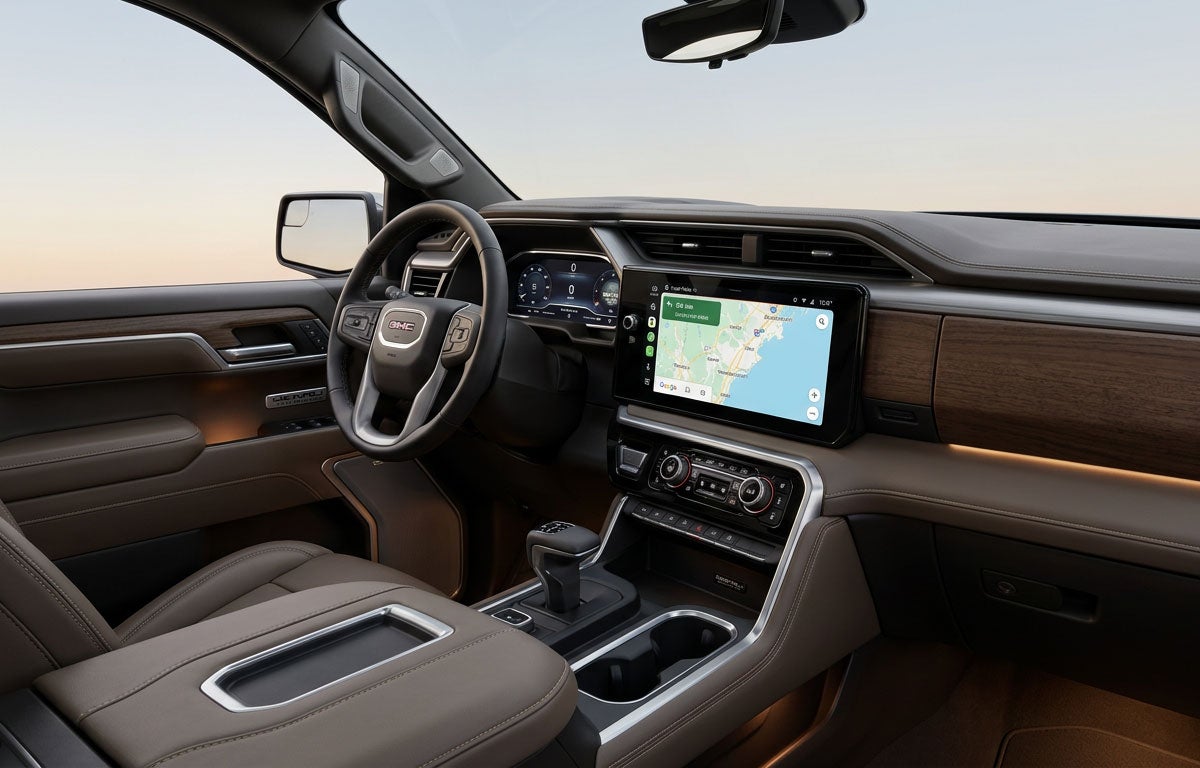
The Sierra 1500's cold-weather feature list scales with trim level. Here's what's available and what's worth using:
Heated Front Seats
Standard on SLE and above. Three-stage heating warms the seat cushion and seatback. Engage as soon as you start the truck on cold mornings — the heat works much faster than the cabin air, so you're warm before the climate system catches up.
Heated Steering Wheel
Standard on SLE and above. Often more noticeable than heated seats — the difference between a frozen leather steering wheel and a warm one is significant in the first few minutes of a cold drive. Pair with seat heaters for the fastest comfort.
Heated Rear Outboard Seats
Available on higher trims. Worth having if you regularly transport family or passengers. The back seat of a truck takes longer to warm up than the front; heated rear seats solve that.
Remote Start
Standard or available on most trims. Start the truck from inside your home or office and let it warm up before you get in. The cabin is comfortable, the windshield is starting to clear, and the seat heaters have a head start. Particularly useful at -10°F.
Heated Windshield Washer System
Heats the washer fluid before it hits the windshield, preventing frozen washer streaks and clearing salt-spray buildup faster. Available on higher trims.
Heated Mirrors
Standard on SLE and above. Clears frost and ice from the side mirrors automatically when the rear defroster is on. Critical for safe winter driving — frozen side mirrors create real blind spots.
Dual-Zone Automatic Climate Control
Standard on SLE and above. Driver and passenger can set independent temperatures, and the system manages defroster output automatically. Worth using the auto setting on cold mornings — it directs warm air efficiently to defrost the windshield while warming the cabin.
Block Heater (Available)
Particularly useful for the Duramax diesel and recommended for sub-zero starts. Plugs into a standard 120V outlet and warms the engine block overnight, making cold starts easier on the engine and faster to warm up.
Best Sierra 1500 Trims for Maine Winters
Best All-Around: SLT or AT4
The SLT with 4WD is an excellent winter daily driver — comfortable, well-equipped, with the safety and traction features you actually need. The AT4 adds a factory 2-inch lift, hill descent control, and a more aggressive stance that helps in deeper snow conditions while still working well as a daily driver.
Best Value: SLE or Elevation with 4WD
Both include heated front seats, heated steering wheel, dual-zone climate control, and the GMC Pro Safety suite as standard equipment. With 4WD and a set of dedicated winter tires, either is fully capable as a Maine winter daily driver at a more accessible price point than the SLT or AT4.
Best for Rural / Backcountry Use: AT4
For owners with long unplowed driveways, rural property access, or who regularly drive on rough winter roads, the AT4's lift, skid plates, hill descent control, and rear locking differential provide capability the standard trims don't match.
Best for Highway Commuters: Denali or Denali Ultimate
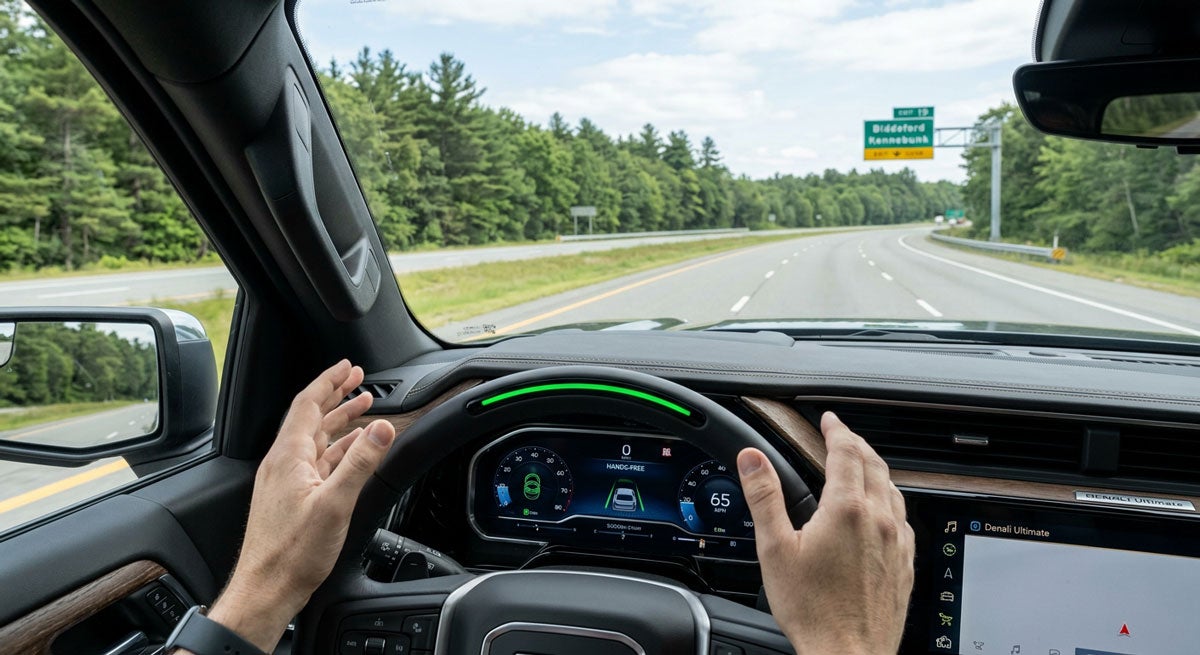
For owners who spend most of their winter driving on the Maine Turnpike, Adaptive Cruise Control and (on the Denali Ultimate) Super Cruise reduce fatigue significantly on long winter highway drives. Standard heated and ventilated leather seats, premium audio, and refined cabin make winter commutes more pleasant.
Most Capable (But Not Best Daily Driver): AT4X
The AT4X has the most off-road hardware, but its mud-terrain tires are actually less effective on ice than the AT4's all-terrains. If your winter driving is mostly road-based with some serious off-road duty, the AT4X earns its price. If it's mostly road-based, the AT4 is a better daily winter truck.
Pre-Winter Service Checklist
We recommend running this checklist on your Sierra 1500 every October or early November. Most can be handled in a single visit to our service department in Arundel.
Battery
Cold weather is hard on batteries. Have yours load-tested before winter — a battery that performed fine in September can struggle to start the truck at 0°F. Replace any battery showing weakness; the cost of a new battery is far less than a roadside service call in a January storm.
Coolant
Verify coolant freeze point. Properly mixed coolant should protect down to -34°F or lower. Maine winters routinely produce -10°F or colder nights; you want margin.
Winter Tire Swap
Swap to dedicated winter tires by mid-November. Don't wait for the first major storm — by then service appointments at every shop in southern Maine are booked solid. Schedule the swap in October if possible.
Wiper Blades
Replace front and rear wiper blades. Winter wiper blades (designed for snow and ice) are worth the modest premium. Bad wipers + winter slush = no visibility.
Washer Fluid
Top off with winter-grade washer fluid rated for at least -25°F. Summer washer fluid can freeze in the lines and reservoir.
Undercoating
If your truck doesn't have factory or aftermarket undercoating, fall is the time to apply it. Maine's road salt is aggressive — a year of unprotected exposure does meaningful corrosion damage to brake lines, frame components, and undercarriage hardware.
Lighting
Check all exterior lights. Days are short in Maine winters; functional headlights, fog lights, brake lights, and turn signals matter.
Emergency Kit
Stock the truck for winter: blanket, flashlight with fresh batteries, jumper cables or jump pack, small shovel, ice scraper, sand or kitty litter for traction, basic snacks, water, phone charger. You probably won't need most of it most years — when you do, you really need it.
Maine-Specific Winter Driving Tips
Salt Exposure
Maine uses brine pre-treatment plus rock salt aggressively in winter. Wash the underside of your truck monthly through the season — most southern Maine car washes have undercarriage spray. Salt buildup accelerates corrosion of brake lines, frame, and bed seams. A quick wash is the cheapest preventative maintenance you can do.
Frozen Door Locks
Less common with modern key fobs but still happens occasionally. Keep a small bottle of de-icer in your house (not in the truck — that defeats the purpose). Spray into the lock cylinder, wait 30 seconds, try the key.
Battery Maintenance in Sub-Zero Weather
Cold reduces battery cranking power dramatically. If you see -15°F overnight, plug in your block heater (if equipped) and consider running the truck briefly the night before to top off the battery charge. Trickle chargers are a worthwhile investment for trucks that sit for several days at a time.
Mirror and Window Defrosting
Heated mirrors typically activate with the rear defroster button. Use it. Frozen mirrors create real blind spots that the truck's blind-zone alert can't fully compensate for.
Drive Conservatively for Conditions
The Sierra 1500's safety and traction systems are excellent, but they can't violate physics. Slow down for unfamiliar roads, increase following distance dramatically, brake earlier, and signal lane changes well in advance. The trucks that end up in ditches in Maine winter aren't there because the trucks failed — they're there because drivers asked the truck to do something it physically couldn't.
Watch for Black Ice
The most dangerous winter condition isn't snow — it's invisible black ice on bridges, shaded sections, and overnight after a thaw-freeze cycle. Anytime ambient temperature is below 35°F, treat shaded pavement and bridges as potentially icy regardless of how clear they look.
Frequently Asked Questions
Is the GMC Sierra 1500 good for winter driving in Maine?
Yes, particularly with 4WD-equipped trims and dedicated winter tires. Standard StabiliTrak, traction control, and the available 4WD system with two-speed transfer case make the Sierra one of the most confident winter daily drivers available. The AT4 and AT4X add a factory 2-inch lift, skid plates, and hill descent control for rougher winter roads. For maximum safety, dedicated winter tires are strongly recommended on any Sierra used as a daily driver from December through March.
When should I use 4WD Auto vs. 4Hi vs. 4Lo on the Sierra 1500?
Use Auto 4WD as your default in winter — the system automatically engages 4WD when wheel slip is detected. Use 4Hi when roads are clearly snow-covered, icy, or slick at sustained speeds above 25 mph. Use 4Lo for deep snow, steep snowy grades, or recovery situations at low speeds (under 25 mph). 2WD should be limited to dry pavement and summer driving.
Do I need winter tires on a 4WD Sierra 1500?
Yes — strongly recommended. 4WD helps you accelerate from a stop, but it does not improve braking distance or cornering grip. Dedicated winter tires use a softer rubber compound that stays pliable in cold temperatures and aggressive tread designs that grip snow and ice. The improvement in stopping distance on cold pavement is dramatic — typically 25-40% shorter than all-season tires. For Maine winters, dedicated winter tires are the single biggest safety improvement you can make.
Are studded tires worth it in Maine?
For some drivers, yes. Studded tires excel on hard ice — particularly on rural roads, unplowed surfaces, and overnight ice. Maine permits studded tires from October 1 through April 30. For drivers who primarily drive on plowed paved roads, modern premium non-studded winter tires (Michelin X-Ice, Bridgestone Blizzak, Nokian Hakkapeliitta) offer excellent performance with less road noise and no stud-related restrictions. Choose based on your typical driving environment.
Which Sierra 1500 trim is best for Maine winters?
For most daily drivers, the SLT or AT4 with 4WD is the best balance of capability and comfort. The SLE and Elevation with 4WD are excellent value choices. The Denali and Denali Ultimate add Adaptive Cruise Control and Super Cruise (Denali Ultimate) for less-fatiguing winter highway commutes. The AT4X is the most capable in deep snow but its mud-terrain tires are actually less effective on ice than the AT4's all-terrains — making the AT4 a better road-based daily winter driver.
What cold-weather features come on the Sierra 1500?
Standard on SLE and above: heated front seats, heated steering wheel, heated mirrors, dual-zone automatic climate control. Available on higher trims: heated rear outboard seats, heated and ventilated front seats, heated windshield washer system, remote start, and a block heater for cold-start performance. Most cold-weather comfort features are well-thought-out and genuinely useful in Maine conditions.
When should I bring my Sierra 1500 in for winter prep at Weirs GMC?
Schedule winter prep service in October or early November — before the first major storm fills service department schedules across the region. We typically run battery tests, coolant checks, tire swaps, washer fluid top-offs, and undercoating inspections in a single appointment. Booking early ensures you have the truck ready before you need the capability.
Can I use Super Cruise in Maine winters?
Sometimes. Super Cruise can become temporarily unavailable when cameras can't read lane markings clearly — heavy snow, ice covering road lines, or salt buildup on the windshield. The system disengages cleanly with proper warning. On clear winter days with plowed roads and visible lane markings, Super Cruise works as intended on compatible highways. Don't rely on it during active winter storms or in low-visibility conditions.
Get Your Sierra 1500 Winter-Ready at Weirs GMC
Maine winters reward preparation. Whether you're shopping for a new Sierra 1500 with year-round capability in mind, or your current Sierra needs its annual winter prep service, our team in Arundel has you covered. Our service department is GMC factory-trained, our parts department stocks the right winter wiper blades and tire options for southern Maine, and our sales team can help you find the right trim, drivetrain, and configuration for the way you actually drive in winter.
Schedule Winter Prep Service | Search Available Sierra 1500 Inventory | Talk to Our Team
Related Sierra 1500 Resources
About Weirs GMC: Weirs Motor Sales has been a family-owned GMC dealership in Arundel, Maine for over 65 years, serving Biddeford, Saco, Kennebunk, Kennebunkport, and all of southern Maine. Our service team handles winter prep on dozens of Sierras every fall, and we know exactly what southern Maine winters demand from a truck. If you have winter driving or maintenance questions this guide didn't answer, our team is here to help.
Running the right tires matters up here — explore tires and our price match guarantee at Weirs GMC before a Maine winter.